
 By wild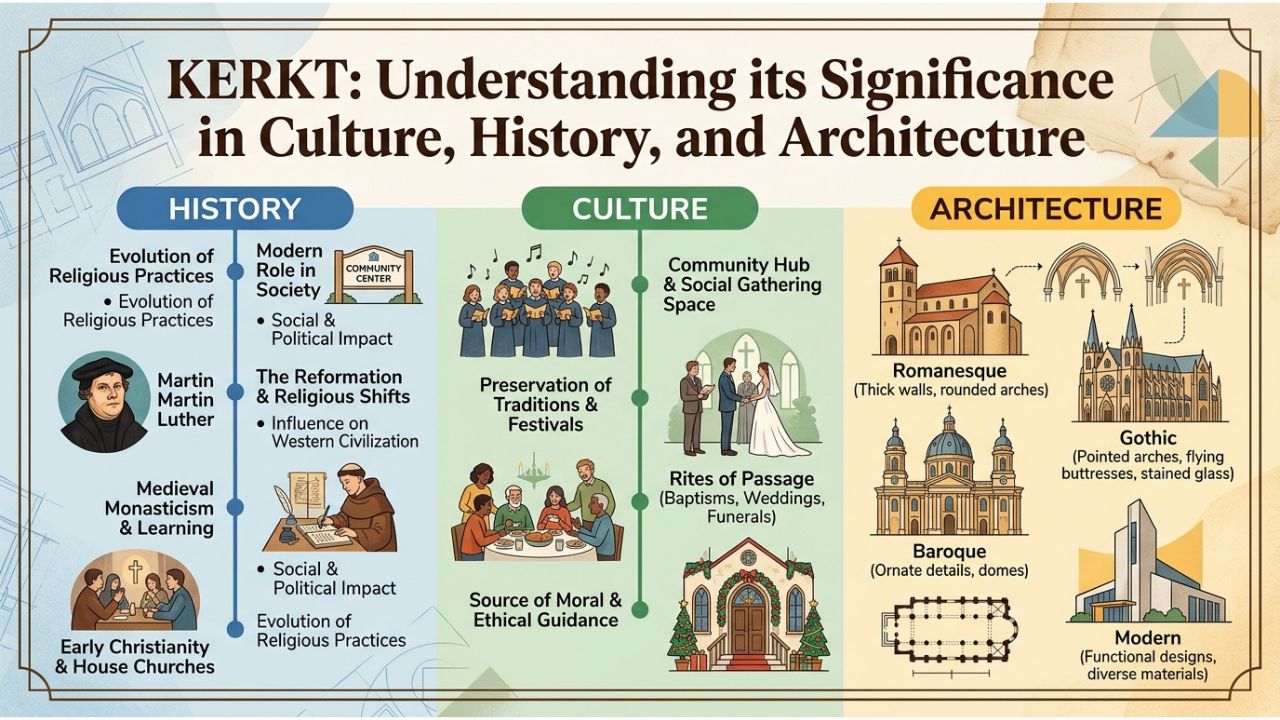
Kerkt is commonly associated with the word “Kerk,” which refers to a church in Dutch and some Germanic languages. In broader usage, Kerkt represents a place of worship, community gathering, and cultural heritage. These structures have played an important role in shaping European towns and villages for centuries.
Kerkt buildings are more than religious spaces. They are historical landmarks that reflect architectural evolution, social development, and cultural identity. From medieval times to modern society, Kerkt has remained a symbol of tradition, unity, and continuity.
Kerkt Historical Development and Origins
The history of Kerkt dates back to early Christian communities in Europe. Initially, small wooden structures were used for worship, but over time, these evolved into large stone buildings designed to accommodate growing populations.
During the medieval period, Kerkt structures became central to town life. They were often the tallest and most important buildings in a settlement. As Christianity expanded across regions such as the Netherlands and Germany, Kerkt architecture became more sophisticated, adopting Romanesque and later Gothic styles.
These developments made Kerkt buildings not only places of worship but also symbols of power, stability, and cultural identity.
Kerkt Architectural Features and Design
Kerkt architecture is known for its distinctive and impressive design elements. One of the most recognizable features is the tall tower or spire, which often serves as a landmark visible from long distances.
Inside a Kerkt building, high ceilings, arched structures, and large stained-glass windows create a sense of space and light. These features are designed to inspire reflection and spiritual connection.
Many K erkt buildings also include bell towers, which historically marked time, announced events, and gathered communities. The combination of stone construction and artistic detail makes Kerk t architecture both functional and visually striking.
Kerkt Cultural and Social Importance
Ke rkt structures have always played an important role in community life. Beyond religious services, they have been used for ceremonies, public gatherings, weddings, funerals, and cultural events.
In many towns, Ke rkt buildings serve as cultural heritage sites that preserve local traditions and history. They often contain artworks, memorials, and historical records that reflect the identity of the community.
Ker kt also acts as a social center where people come together, strengthening community bonds and shared values.
Kerkt in Modern Society
In modern times, the role of K erkt has evolved. While many K erkt buildings continue to function as active places of worship, others have been repurposed as museums, cultural centers, or concert halls.
Modern Ker kt institutions often focus on inclusivity, education, and community service. They host exhibitions, charity events, and cultural programs that extend beyond religious activities.
Despite these changes, Ke rkt continues to hold strong symbolic and cultural importance.
Kerkt Architectural Heritage and Preservation
Ker kt buildings are considered valuable architectural heritage sites. Many are protected by national or regional preservation laws due to their historical significance.
Restoration of K erkt structures requires careful planning and skilled craftsmanship. Weather damage, aging materials, and environmental factors make preservation an ongoing challenge.
Efforts to maintain Kerk t architecture ensure that future generations can continue to appreciate these historic and cultural landmarks.
Kerkt Symbolism and Meaning
Ker kt carries deep symbolic meaning in many cultures. It often represents faith, hope, unity, and continuity. The tall structure symbolizes reaching toward the divine, while the open interior reflects community and inclusiveness.
For many people, Ke rkt is not just a building but a spiritual and emotional anchor that connects generations.
Kerkt Challenges in the Modern Era
Maintaining K erkt buildings in the modern era comes with several challenges. High restoration costs, declining attendance in some regions, and environmental wear all contribute to preservation difficulties.
Communities often rely on donations, government support, and heritage organizations to maintain these structures. Despite challenges, efforts continue due to their cultural and historical importance.
Conclusion:
K erkt remains an important symbol of history, architecture, and community life. It reflects centuries of cultural development and continues to serve both religious and social functions.
Even in a modern world, Ke rkt stands as a reminder of tradition, unity, and shared heritage. Its architectural beauty and cultural significance ensure that it remains relevant across generations.