
 By wild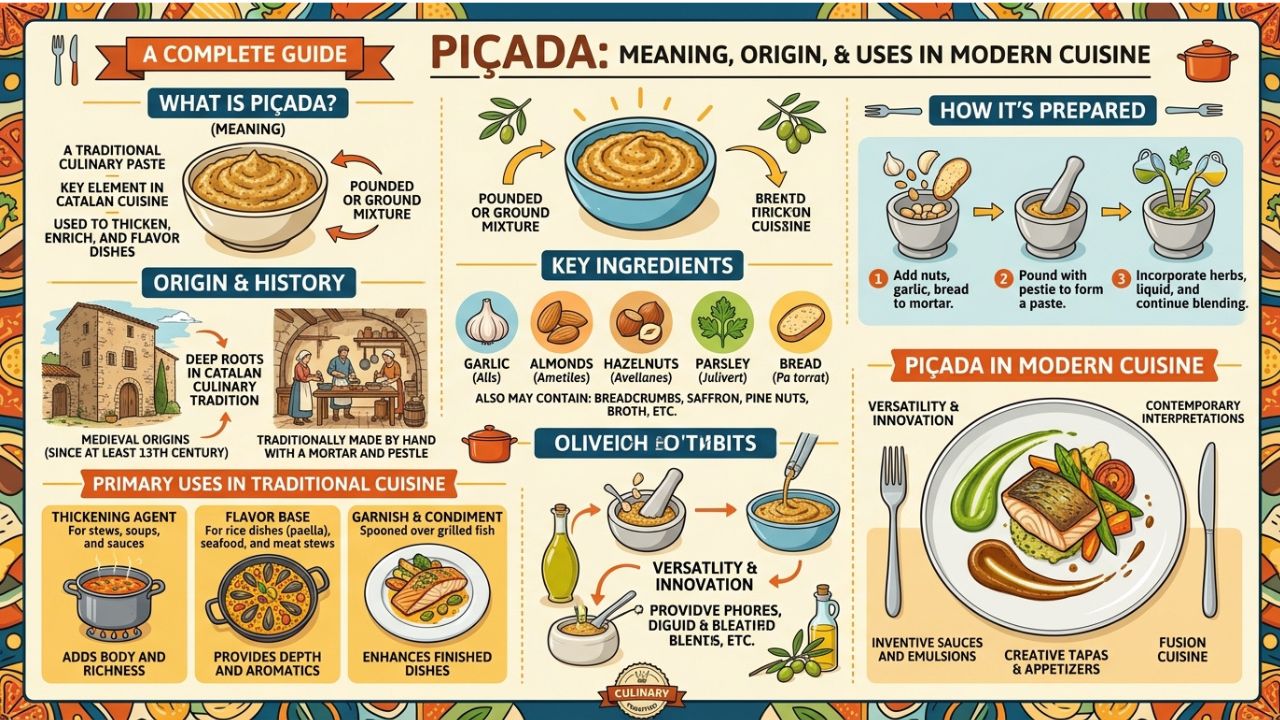
Piçada is a traditional-inspired culinary concept that refers to a style of preparing food using crushed, chopped, or pounded ingredients to create rich and flavorful mixtures. In many culinary contexts, piçada represents rustic cooking methods that focus on freshness, simplicity, and strong natural taste. Over time, piçada has evolved from a traditional preparation technique into a modern culinary idea used in sauces, seasonings, and side dishes. This article explores piçada in detail, including its meaning, origin, preparation methods, uses, benefits, and cultural importance.
What is Piçada?
Piçada is best described as a food preparation style where ingredients are crushed or finely chopped and mixed together to form a textured blend. Unlike fully blended sauces or purees, piçada maintains a slightly coarse consistency, which enhances both texture and flavor.
The concept of piçada is not limited to a single recipe. Instead, it can include herbs, vegetables, garlic, spices, and sometimes meat or seafood depending on regional interpretation. The main idea behind piçada is to release natural flavors by physically breaking down ingredients rather than over-processing them.
This makes piçada a flexible culinary method that can be used in both traditional cooking and modern gastronomy.
Origin and Cultural Background of Piçada
The origin of piç ada is closely linked to traditional rural cooking practices where people used simple tools like mortars and pestles to prepare food. These methods were common in many regions where fresh ingredients were manually processed to create flavorful meals.
Portugal is one of the places where similar traditional cooking techniques are commonly found, especially in rustic cuisine that emphasizes natural ingredients and handmade preparation. In such culinary traditions, crushing herbs, garlic, and spices is a fundamental step in building strong flavor bases.
Over time, piça da-style preparation spread across different cuisines and evolved into modern interpretations used in restaurants and home kitchens worldwide.
Key Characteristics of Piçada
Piç ada has several defining characteristics that make it unique. One of the most important features is its texture. Unlike smooth sauces, piça da retains a rough and rustic consistency due to minimal processing.
Another key characteristic is its strong and concentrated flavor. Because ingredients are crushed rather than fully blended, natural oils and juices are released more effectively, enhancing taste intensity.
Pi çada is also highly versatile. It can be used as a sauce, marinade, topping, or flavor base for various dishes including meats, vegetables, and bread-based meals.
Freshness is another essential characteristic. Piç ada typically relies on fresh herbs and natural ingredients, which contribute to its vibrant taste and aroma.
How Piçada is Prepared
The preparation of piç ada is simple but requires attention to detail. First, fresh ingredients such as garlic, herbs, onions, peppers, or tomatoes are selected based on the desired flavor profile.
These ingredients are then crushed or finely chopped using traditional tools like a mortar and pestle or modern kitchen equipment. The goal is to break down the ingredients without turning them into a smooth paste.
Next, seasonings such as salt, olive oil, and spices are added to enhance flavor and texture. The mixture is gently combined to ensure balance.
Finally, pi çada can be served immediately or used as an ingredient in other dishes, such as grilled meats, roasted vegetables, or bread-based appetizers.
Culinary Uses of Piçada
Pi çada is widely used in both traditional and modern cuisine. One of its most common uses is as a condiment or sauce served alongside main dishes. Its bold flavor makes it an excellent pairing with grilled or roasted foods.
In some dishes, piça da is used as a marinade to enhance the taste of meat, fish, or vegetables before cooking. The crushed ingredients help infuse flavor deeply into the food.
Piça da is also used as a topping for bread, crackers, or appetizers, offering a fresh and flavorful addition to simple snacks.
In modern gastronomy, chefs often use piça da as a base for fusion dishes, combining traditional techniques with contemporary ingredients.
Benefits of Piçada
Pi çada offers several culinary and nutritional benefits. One of the main benefits is enhanced flavor. The crushing process helps release natural oils and juices, resulting in a richer taste experience.
Another benefit is nutritional value. Since piça da uses fresh and minimally processed ingredients, it retains more vitamins and minerals compared to heavily cooked or processed foods.
Piç ada is also easy to prepare, requiring minimal cooking skills and equipment, making it accessible for home cooks.
Additionally, it is highly versatile and can be adapted to suit different cuisines and dietary preferences.
Variations of Piçada in Modern Cooking
Modern cuisine has introduced several variations of piç ada. Some versions are herb-heavy, focusing on garlic, parsley, and olive oil, while others include vegetables or spices for a more complex flavor.
Spicy versions of piç ada are also popular, especially in cuisines that prefer bold and hot flavors. These variations often include chili peppers and aromatic spices.
Fusion versions combine traditional piça da techniques with global ingredients, creating innovative sauces and toppings used in gourmet dishes.
Challenges in Preparing Piçada
Although piç ada is simple in concept, there are some challenges in preparation. One challenge is maintaining the correct texture. Over-crushing ingredients can turn piça da into a paste, losing its rustic quality.
Another challenge is achieving flavor balance. Since piç ada uses strong ingredients, improper proportions can easily overpower the dish.
Consistency can also be difficult when preparing piça da in large quantities, especially in professional kitchens.
Future of Piçada in Global Cuisine
The future of p içada looks promising as global interest in traditional and natural cooking methods continues to grow. Chefs are increasingly exploring rustic techniques that emphasize freshness and authenticity.
With the rise of healthy eating trends, p içada is expected to gain more popularity due to its use of fresh ingredients and minimal processing.
Modern culinary innovation will likely continue to expand piçad a into new variations, blending tradition with global flavors and techniques.
Conclusion
Pi çada is a traditional-inspired culinary concept based on crushed and mixed fresh ingredients that create bold, rich flavors. With roots in rustic cooking traditions, it has evolved into a versatile method used in modern kitchens around the world.
From sauces and marinades to toppings and flavor bases, piç ada continues to prove its value in both home cooking and professional gastronomy. Its simplicity, flexibility, and strong flavor profile make it a timeless culinary technique.